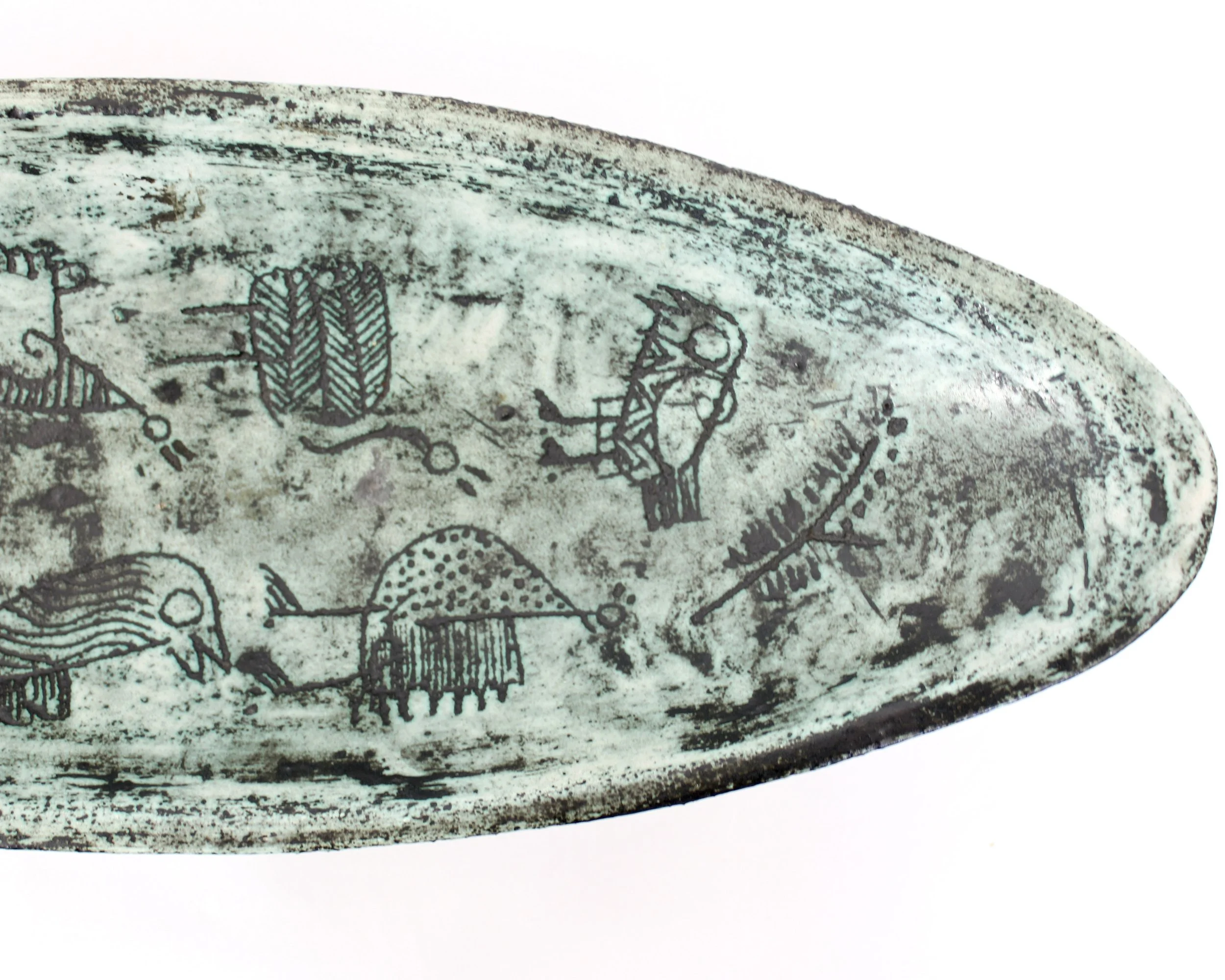
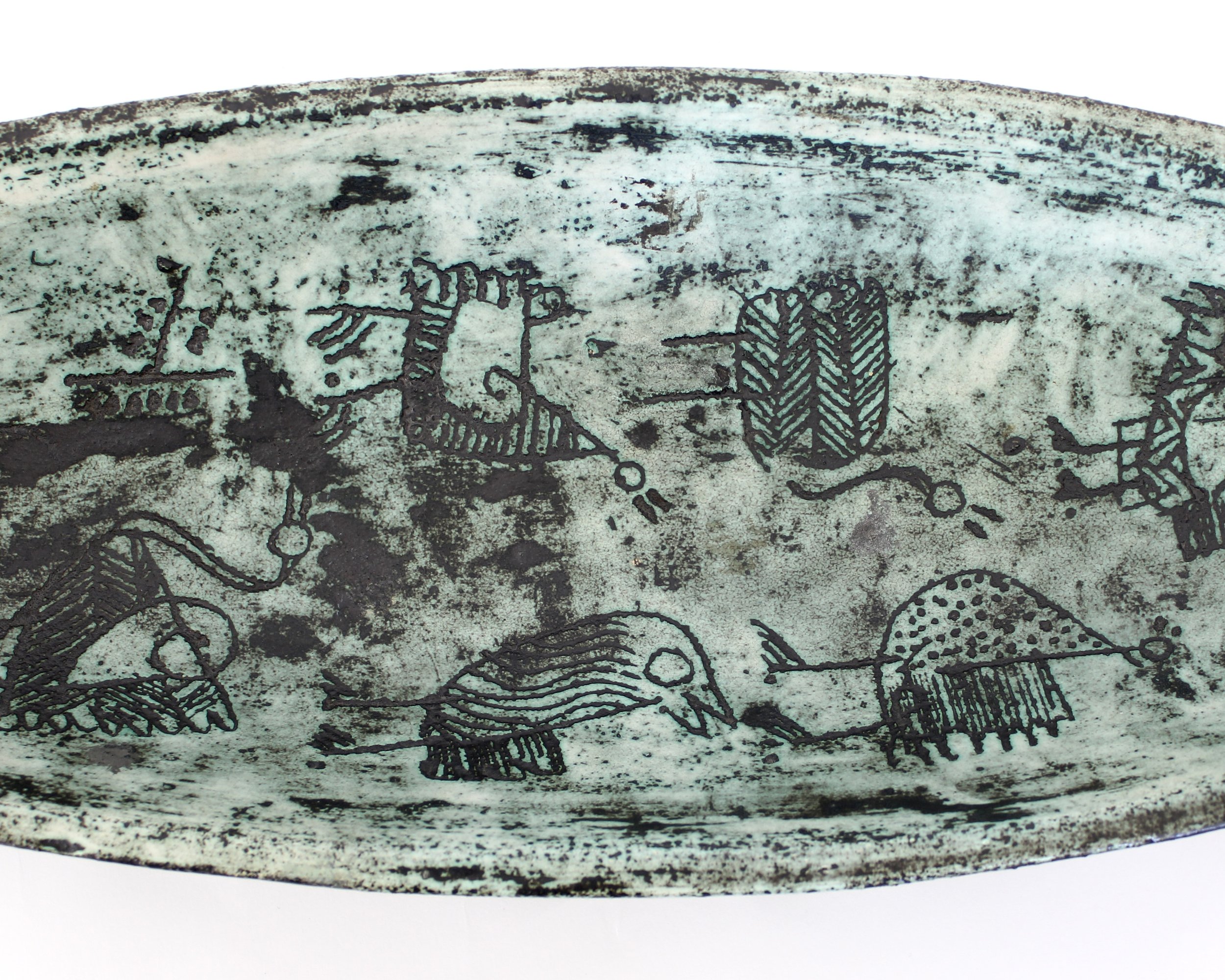


Jacques Blin French Ceramic Artist Scrafitto Decorated Large Elongated Coupe
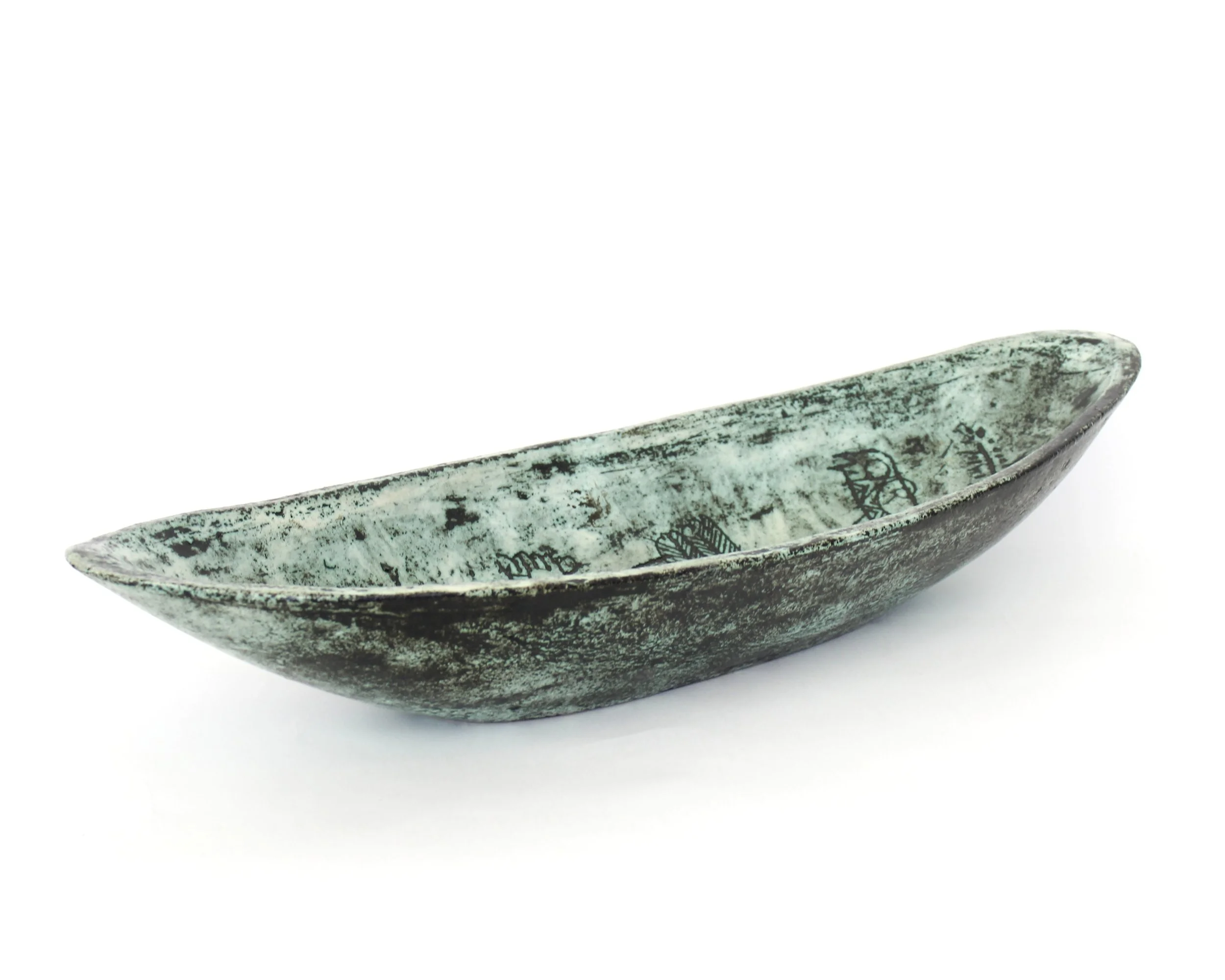
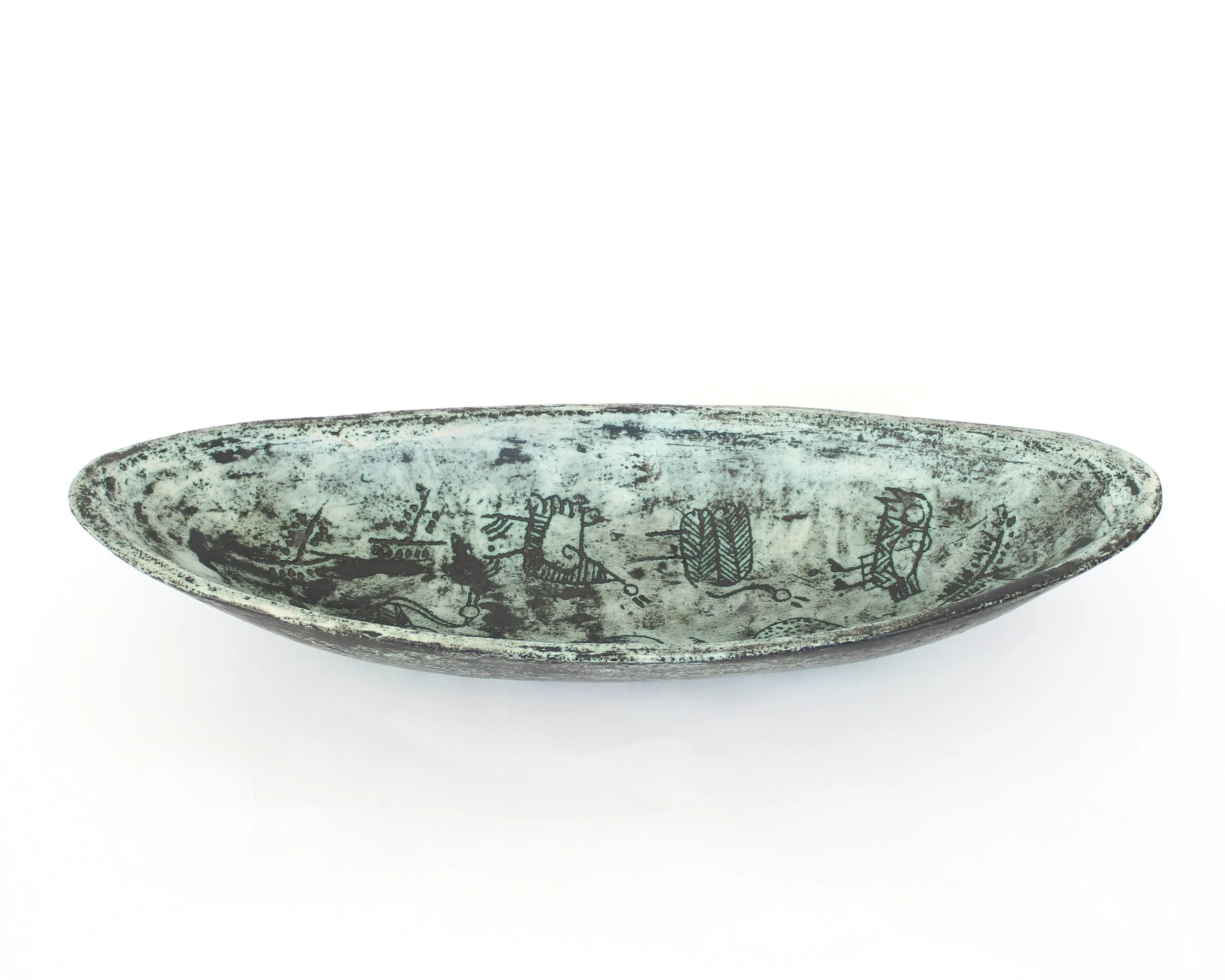
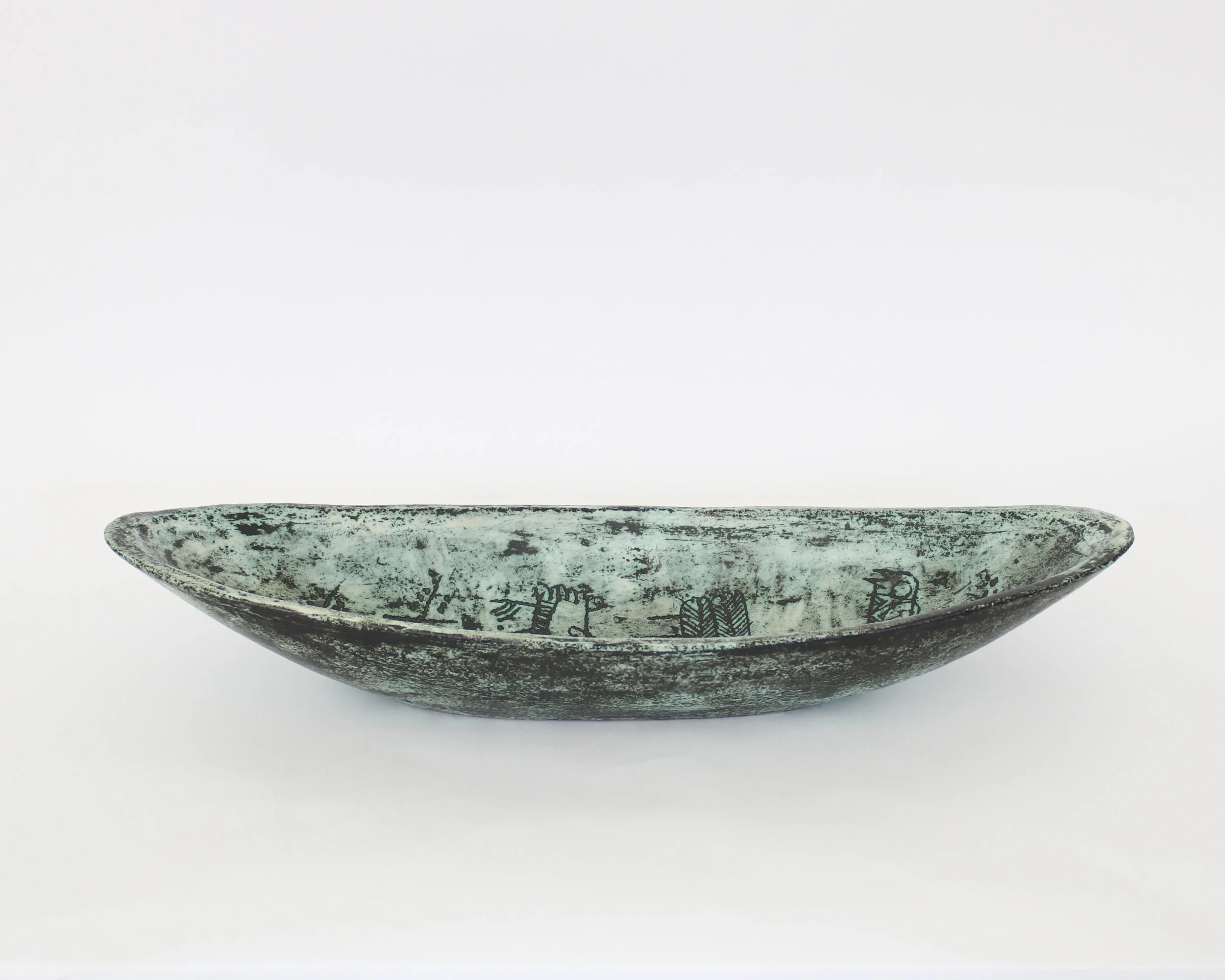
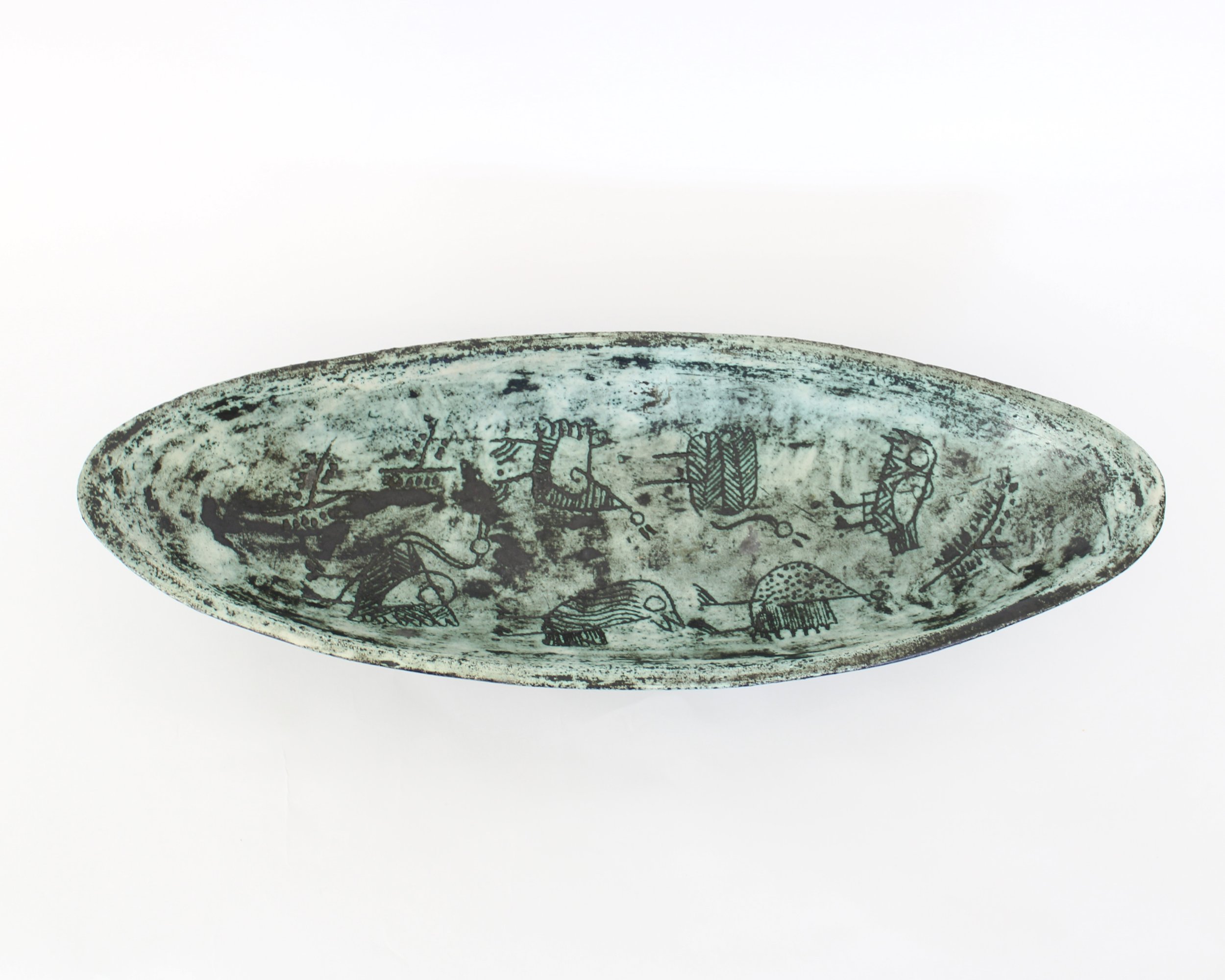
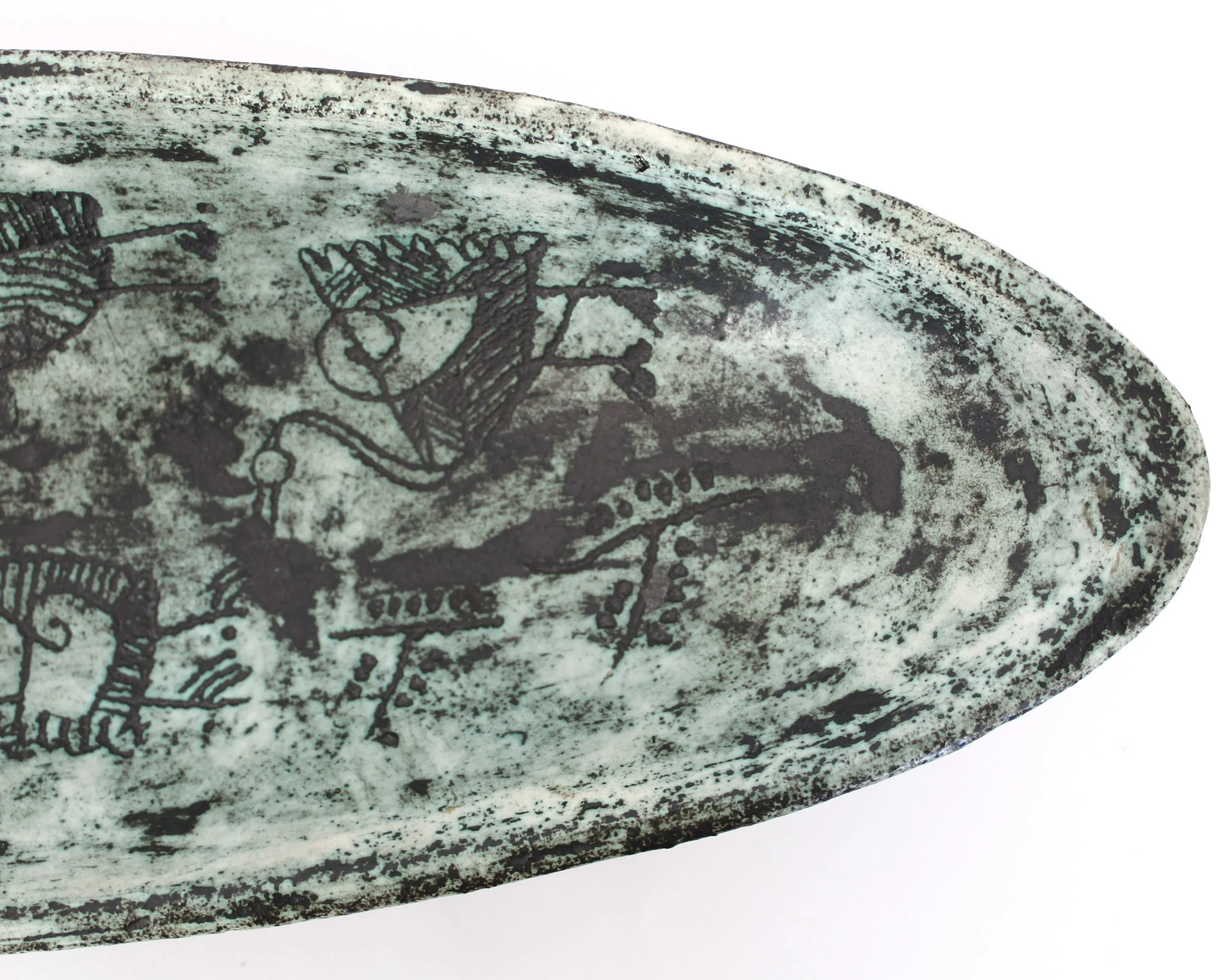
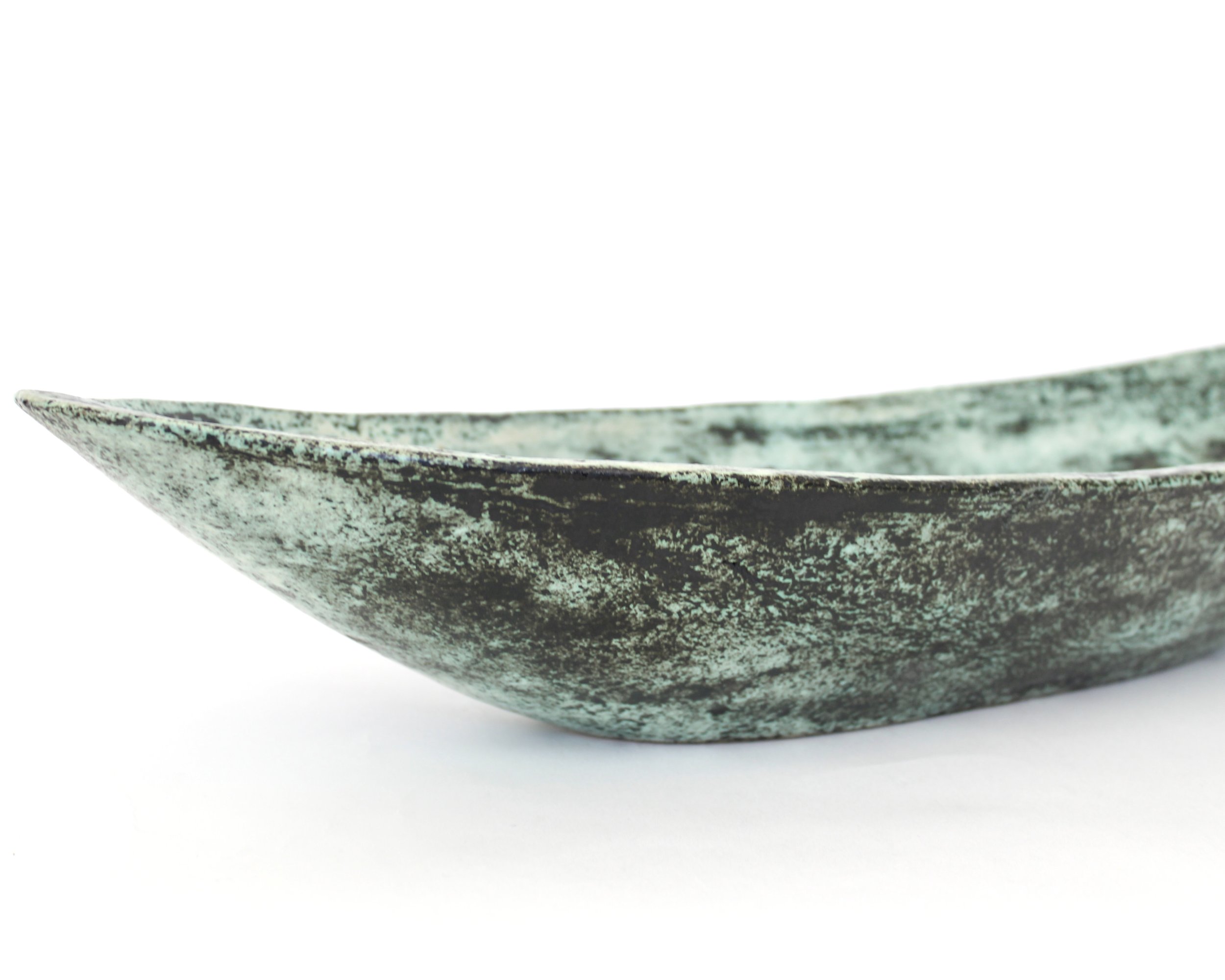
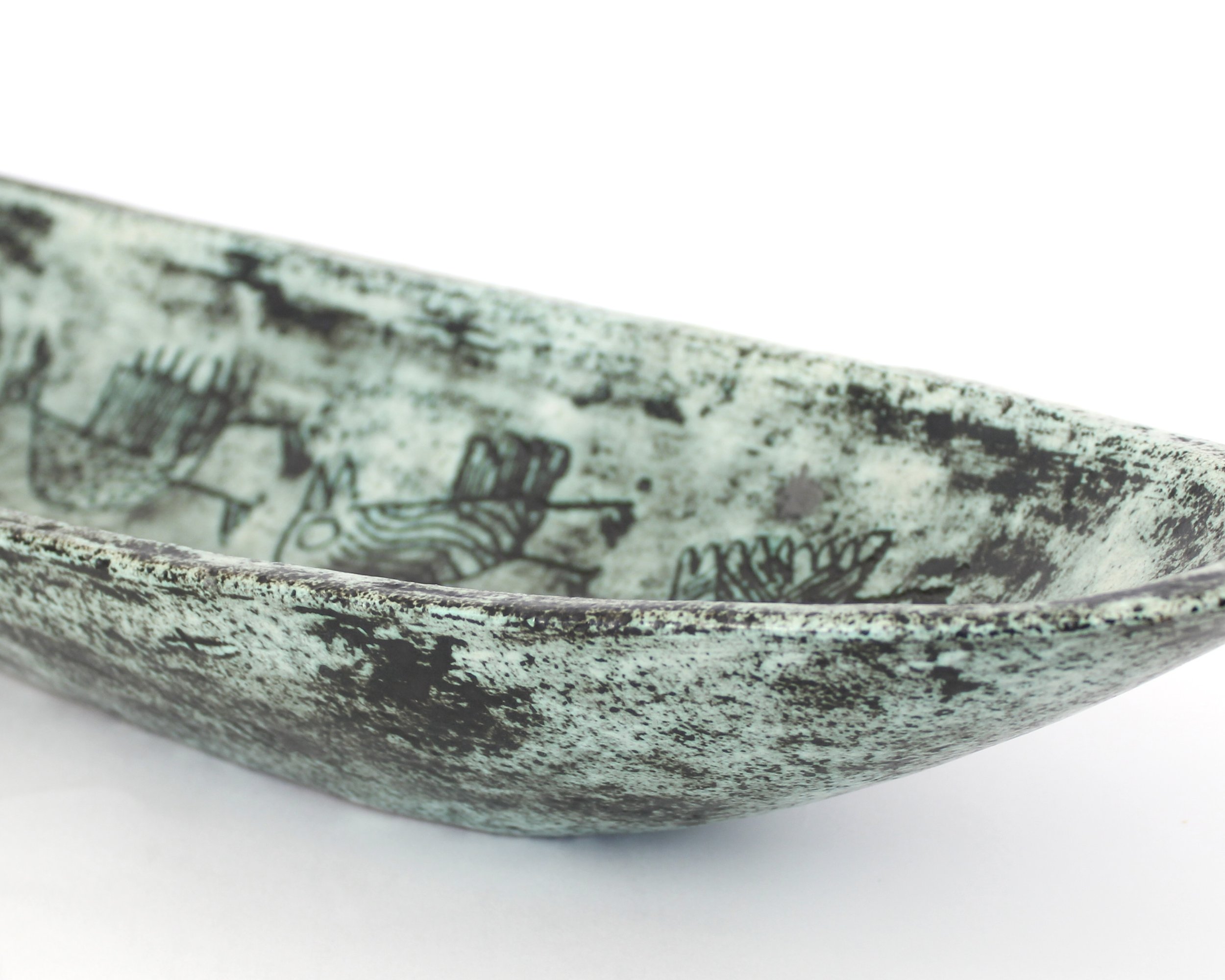
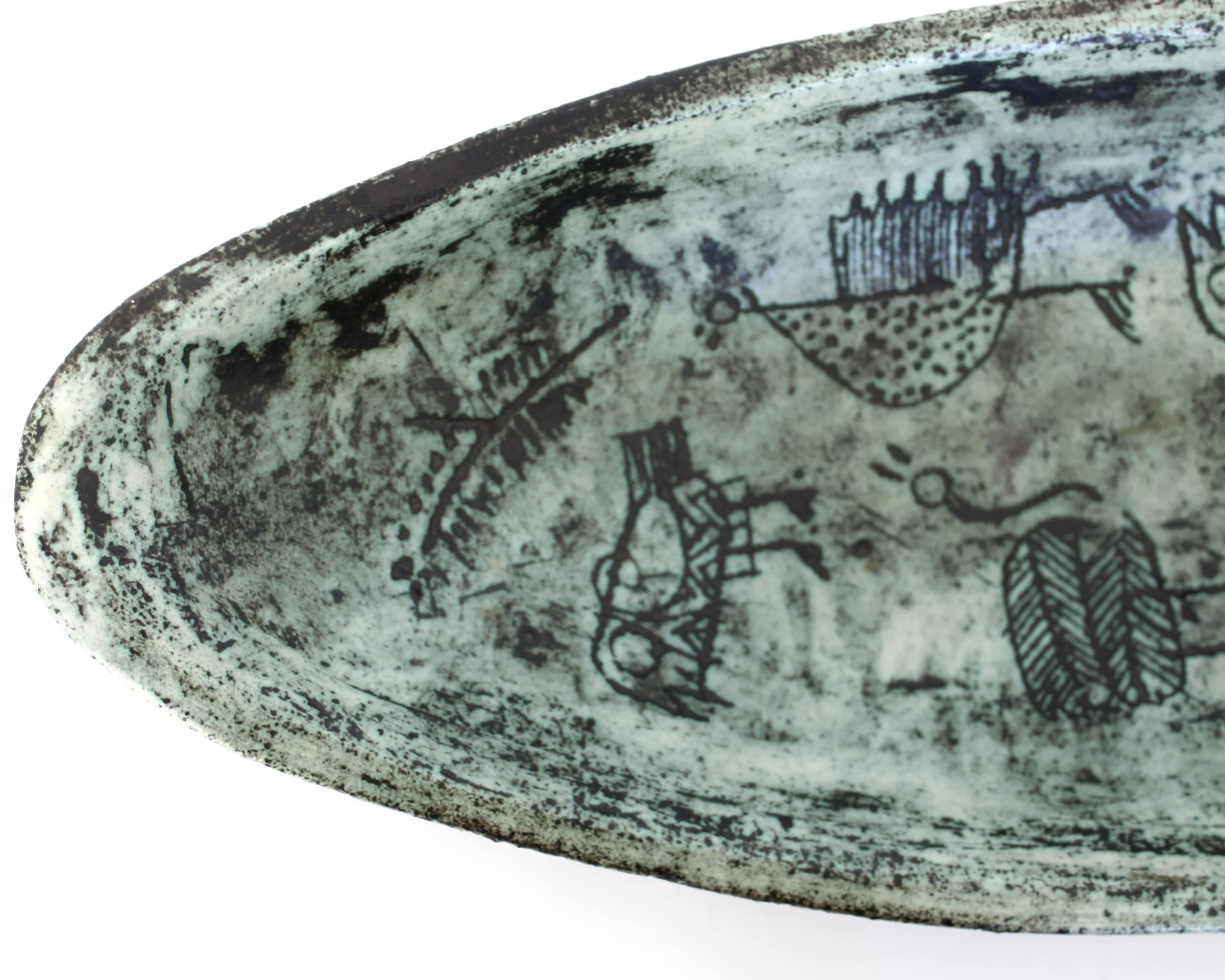
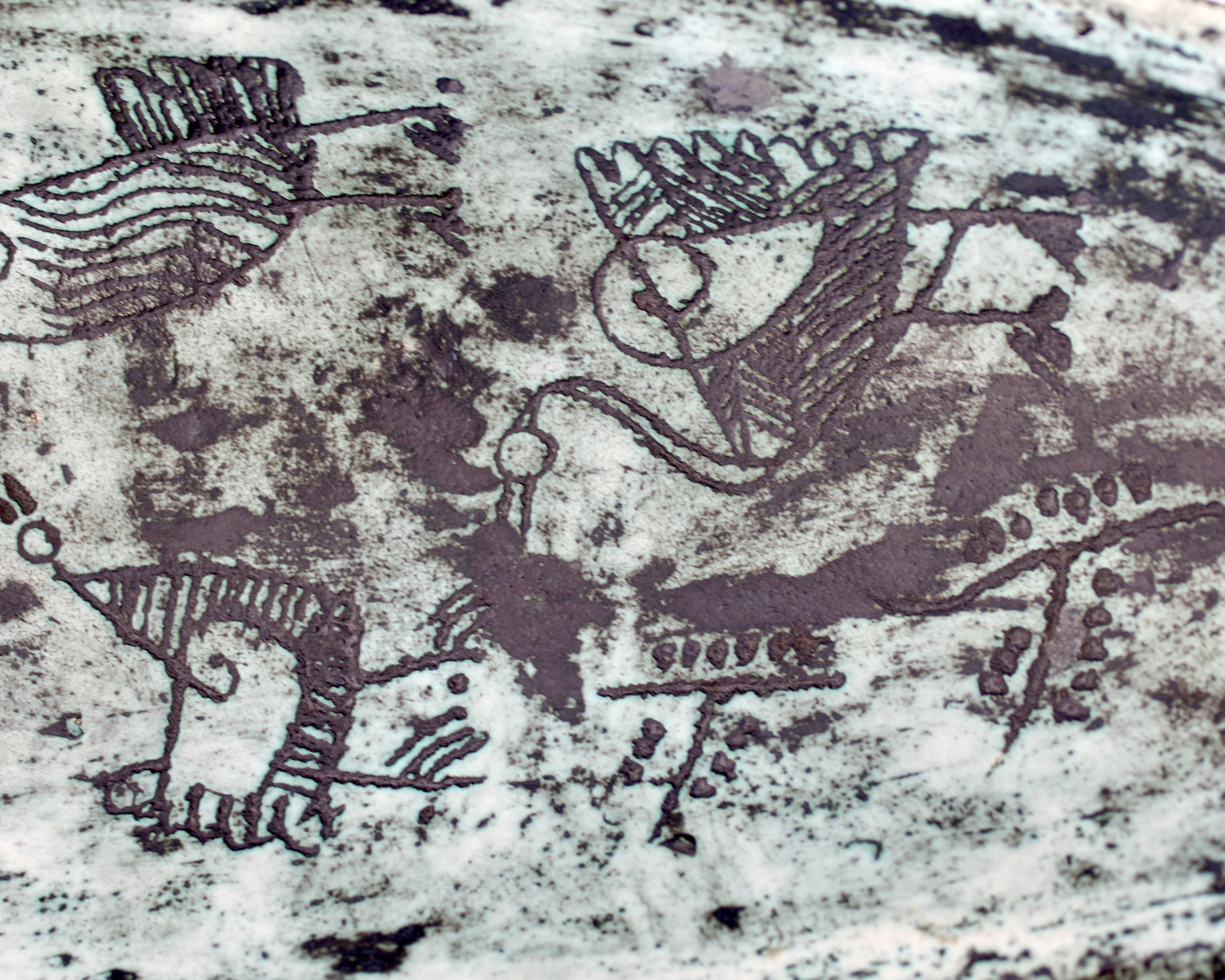
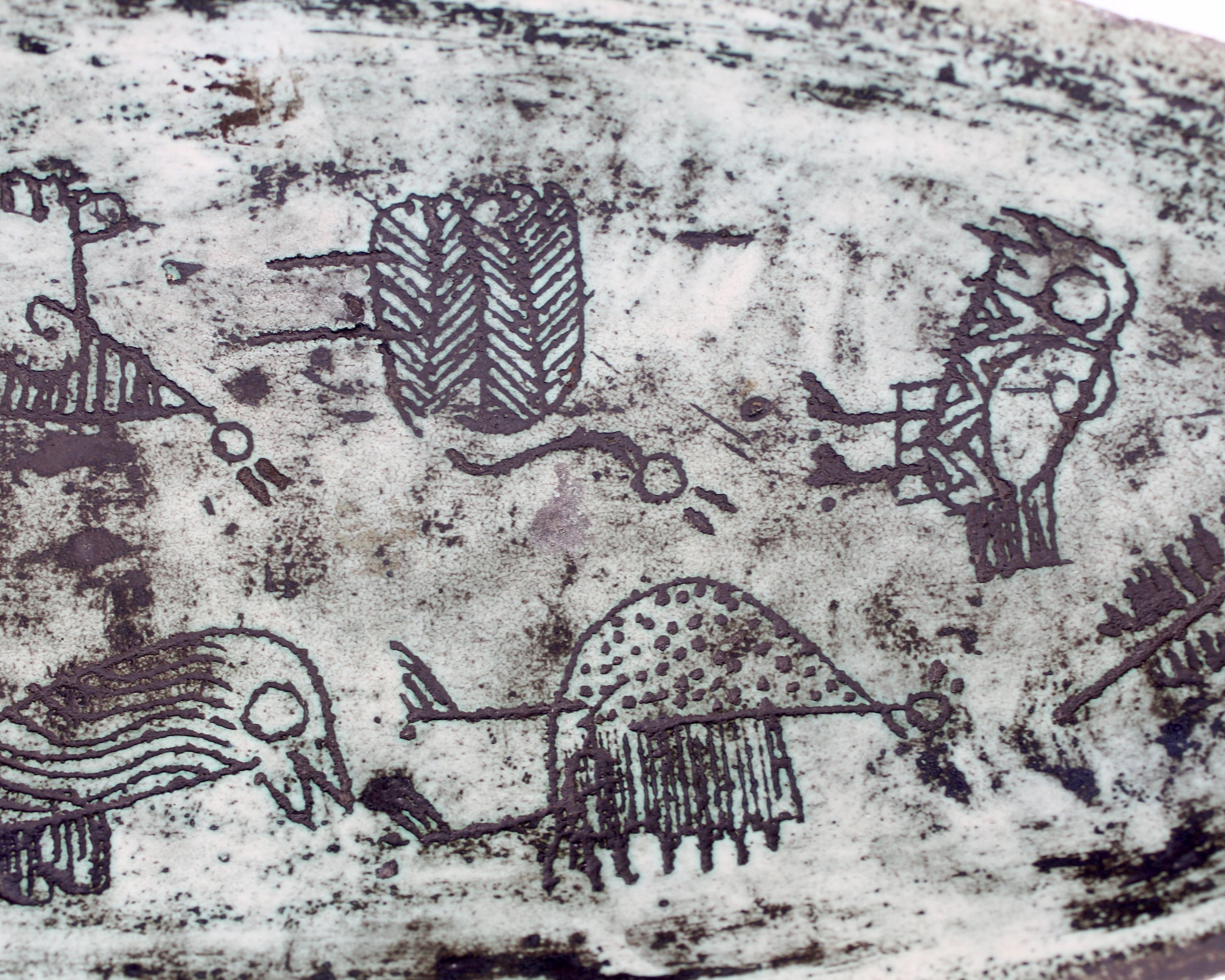
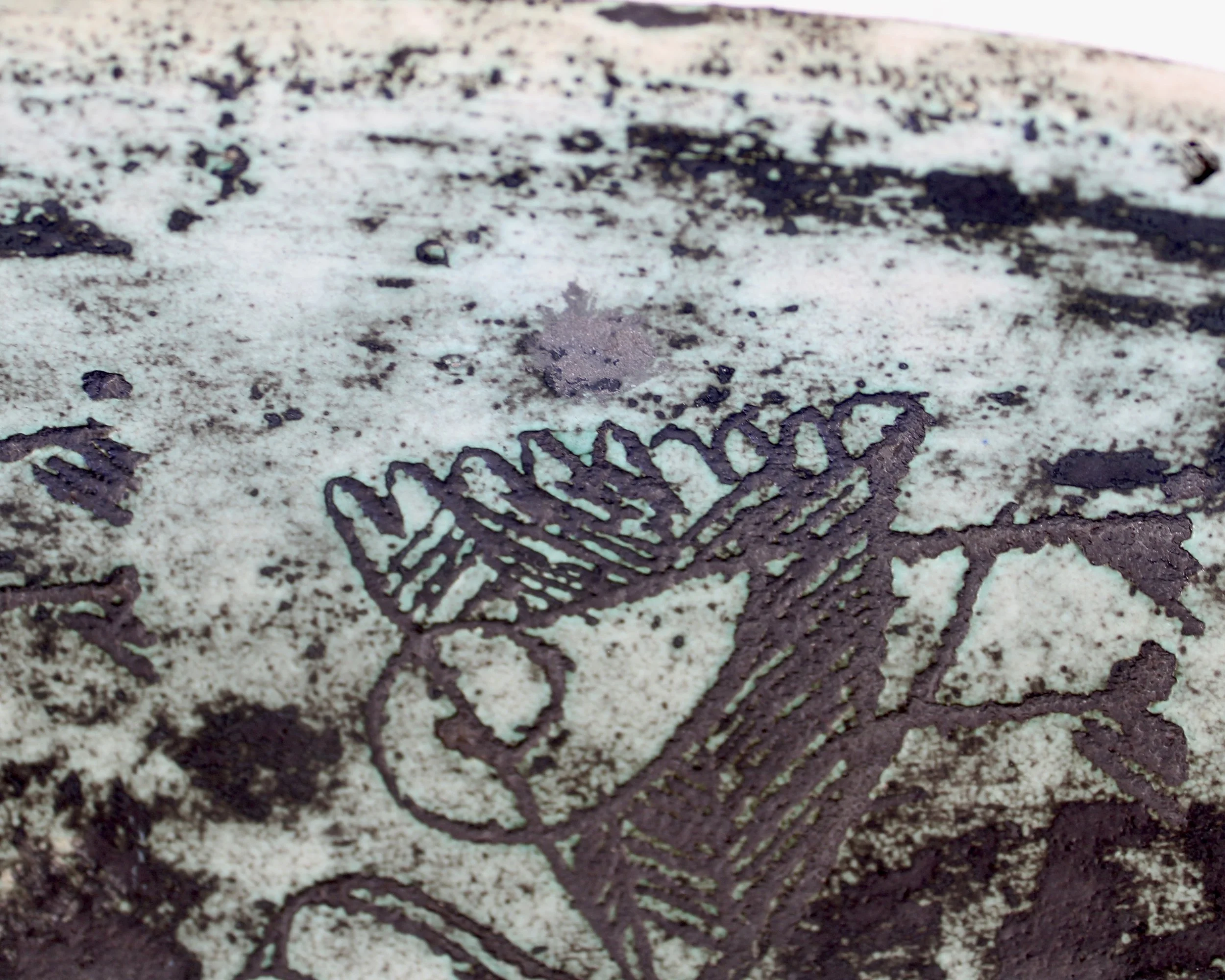
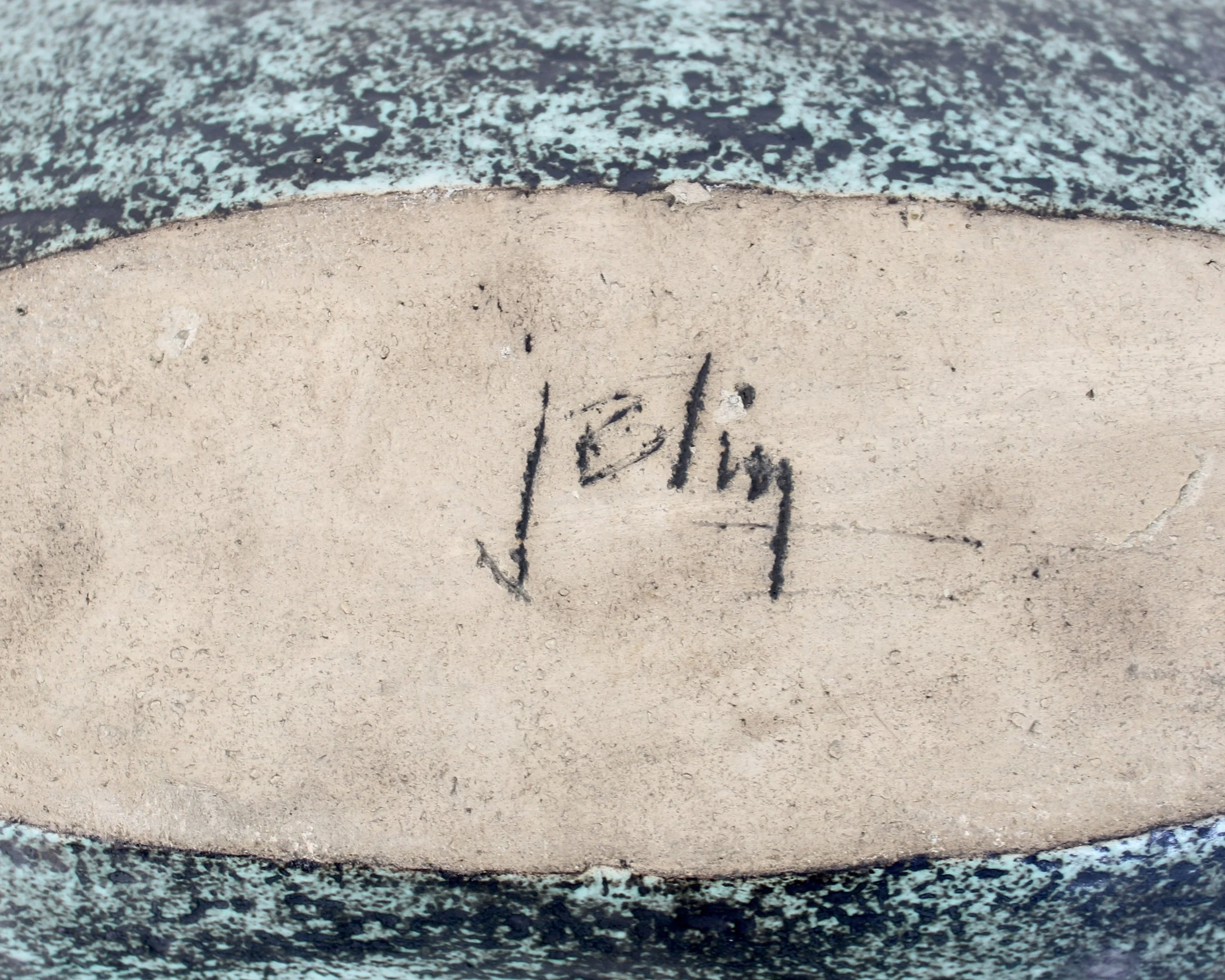
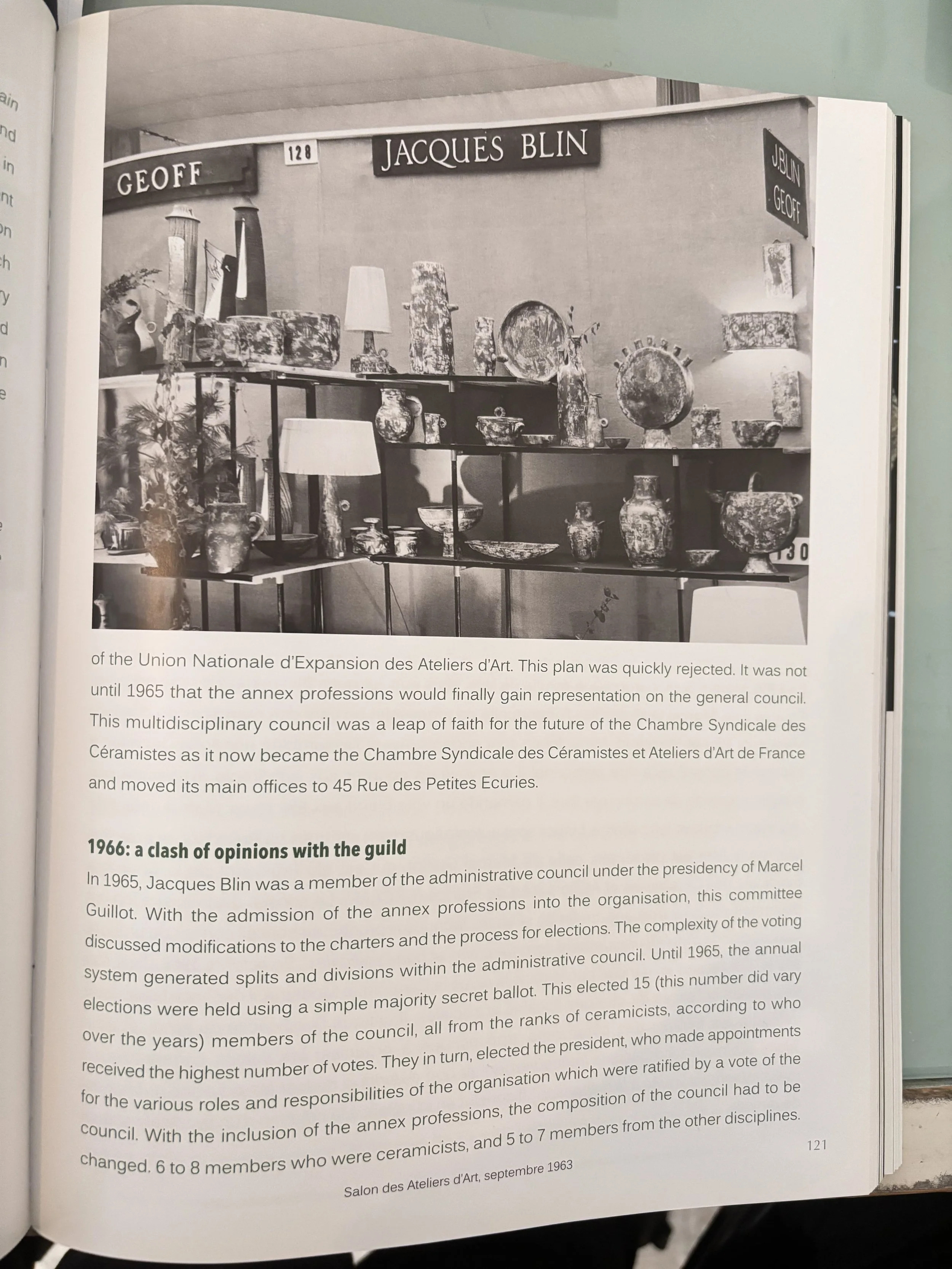
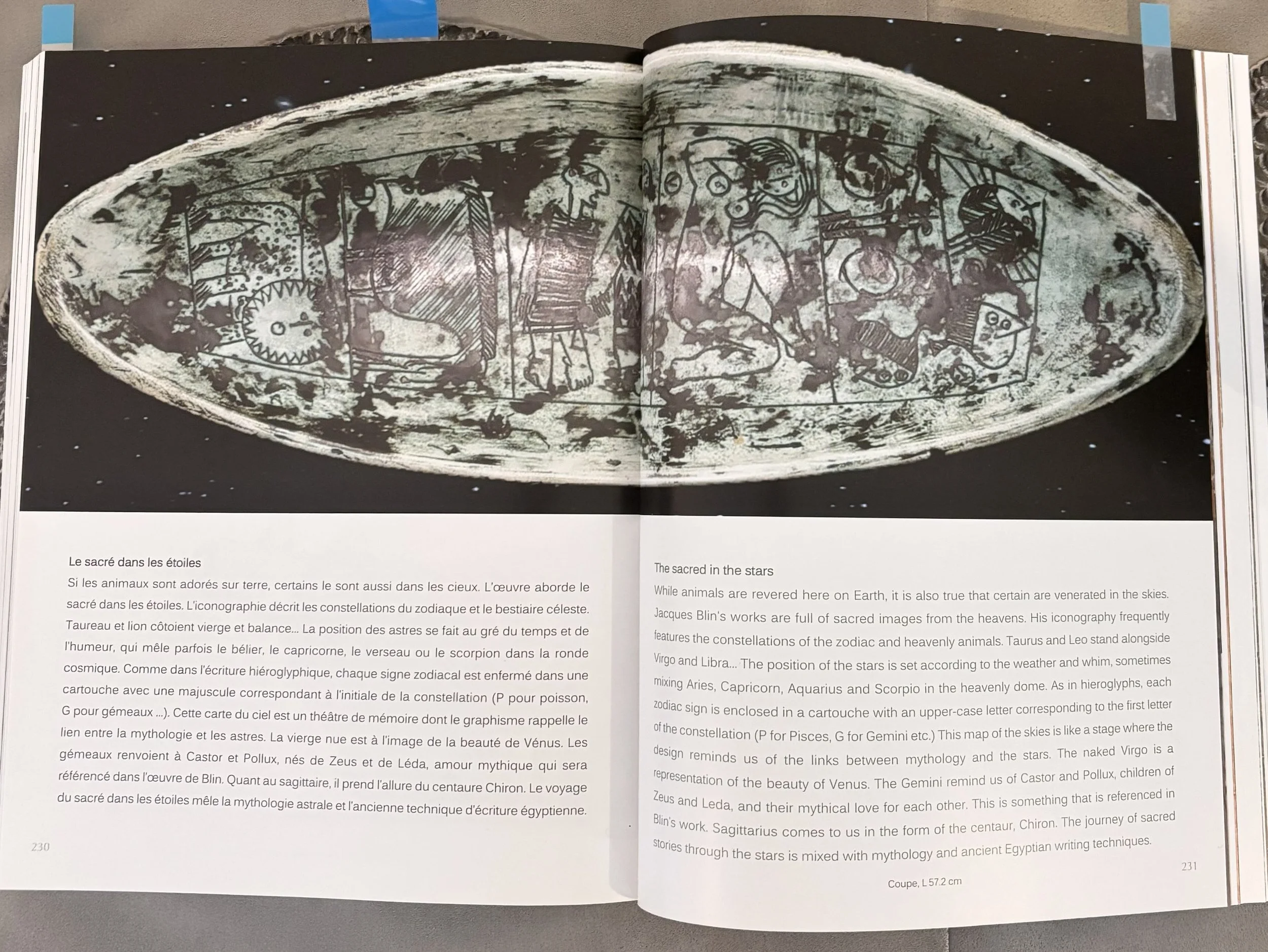
Jacques Blin French ceramic artist very large elongated dish with iconic drawings. Though he started working in the 1940s, making impressive use of slip casting, cutting edge modeling techniques, and wheel throwing, Blin did not make his passion a profession until abandoning an incipient engineering career in the early 1950s. In 1954, Blin opened his first ceramic atelier, exhibiting his work throughout the decade in group shows and the Maison de la Chimie. By 1960 he was exhibiting at both the Salon des Céramistes et des Métiers d’arts de France and the Salon des Métiers d’art à la Porte de Versailles. During the early 1960s Blin developed a new technique with Jean Rustin, etching on his clay creations before firing, adding to these designs later with glaze and oxides. With these steps he improved upon the execution of the semi-abstract imagery by which his work is today recognized—monochromatic images of stylized people, crops, and beasts right out of the cave paintings of his native France, or the mythic tales portrayed in unearthed Greek pottery. He created these beautiful images on cloudy monochromatic backgrounds often in shades of blue as shown here. Throughout the 1960s he presented works at the Salon des artists Décorateurs and Salon des Tuileries the Prague Exposition Internationale de la Céramique Contemporaine, where he won the gold medal in 1962. In 1966 he won the silver medal at the Société des Artistes Français. Marking somewhat of a leap in the evolution of man, writing appeared in agricultural societies in response to the needs of commerce and urbanisation. Blin's work retains an abstract form of expression. It includes geometric and figurative symbols in tables of lines and columns. It classifies, combines and archives objects such as animals, plants, human heads, and geometric forms. The effect is one of organisation of thoughts. These pictograms or "ideograms" are used as a universal language, bringing the real and imaginary worlds closer together. Among the recurring symbols, birds are the ones that feature most often and are found in conjunction with the plant symbols of leaves and trees. Card suits (spades, hearts, clubs, diamonds), geometric shapes (crosses, rhombuses, lines, dots, etc.), industrial drawings (wheels, rulers), symbols of civilizations (Greek, Roman, Egyptian, Celtic) combined to form a cryptic language with infinite possible meanings. Similar piece seen on p 121 and p 231 Literature Jacques Blin Ceramiste & Porteur d'Histoires " Cristine Lavenu. Editions Louvre Victoire Excellent condition wait a minor chip to the edge of the base shown in photo with the artists signature. 22.5"w x 8"d x 3"h
$8000