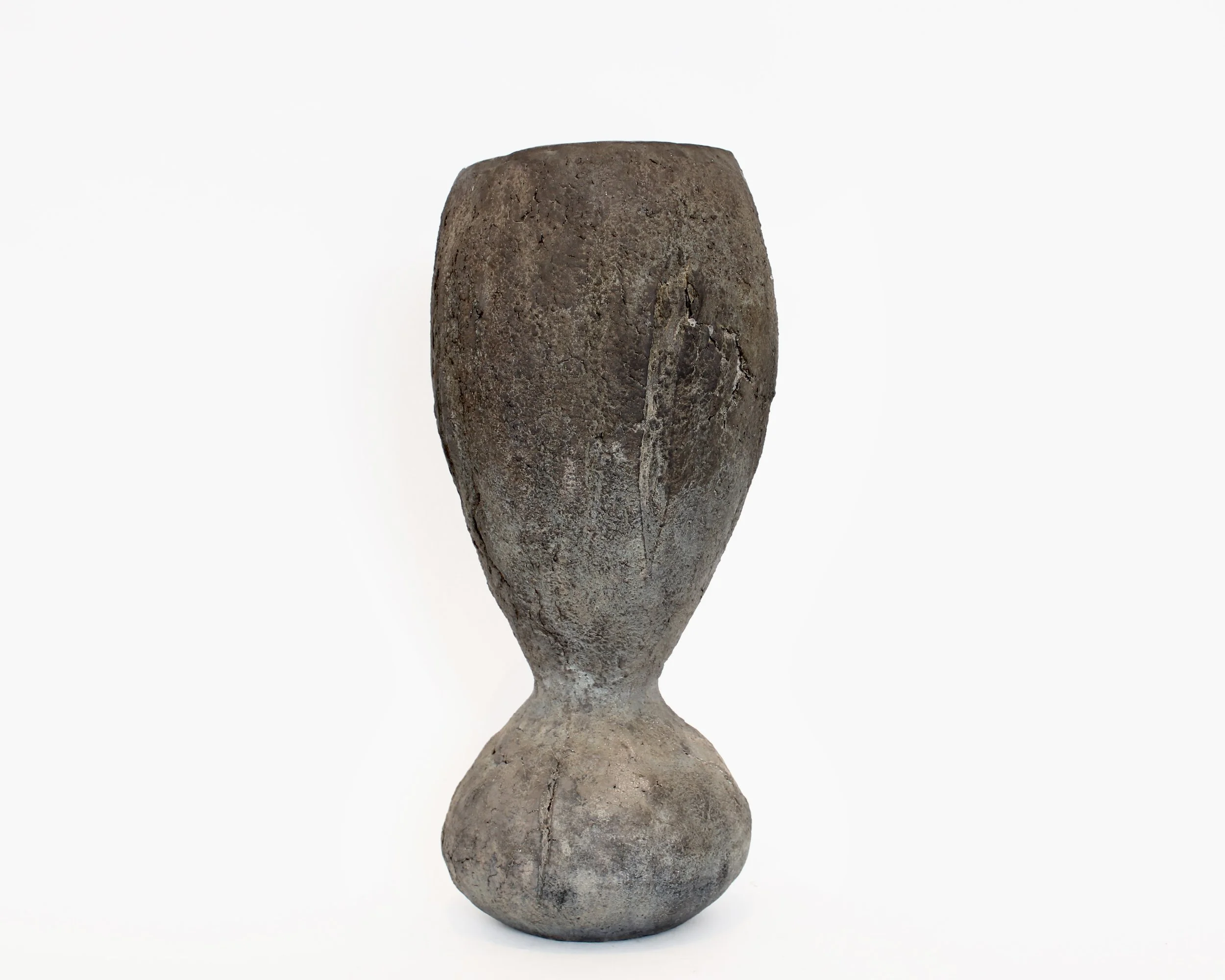
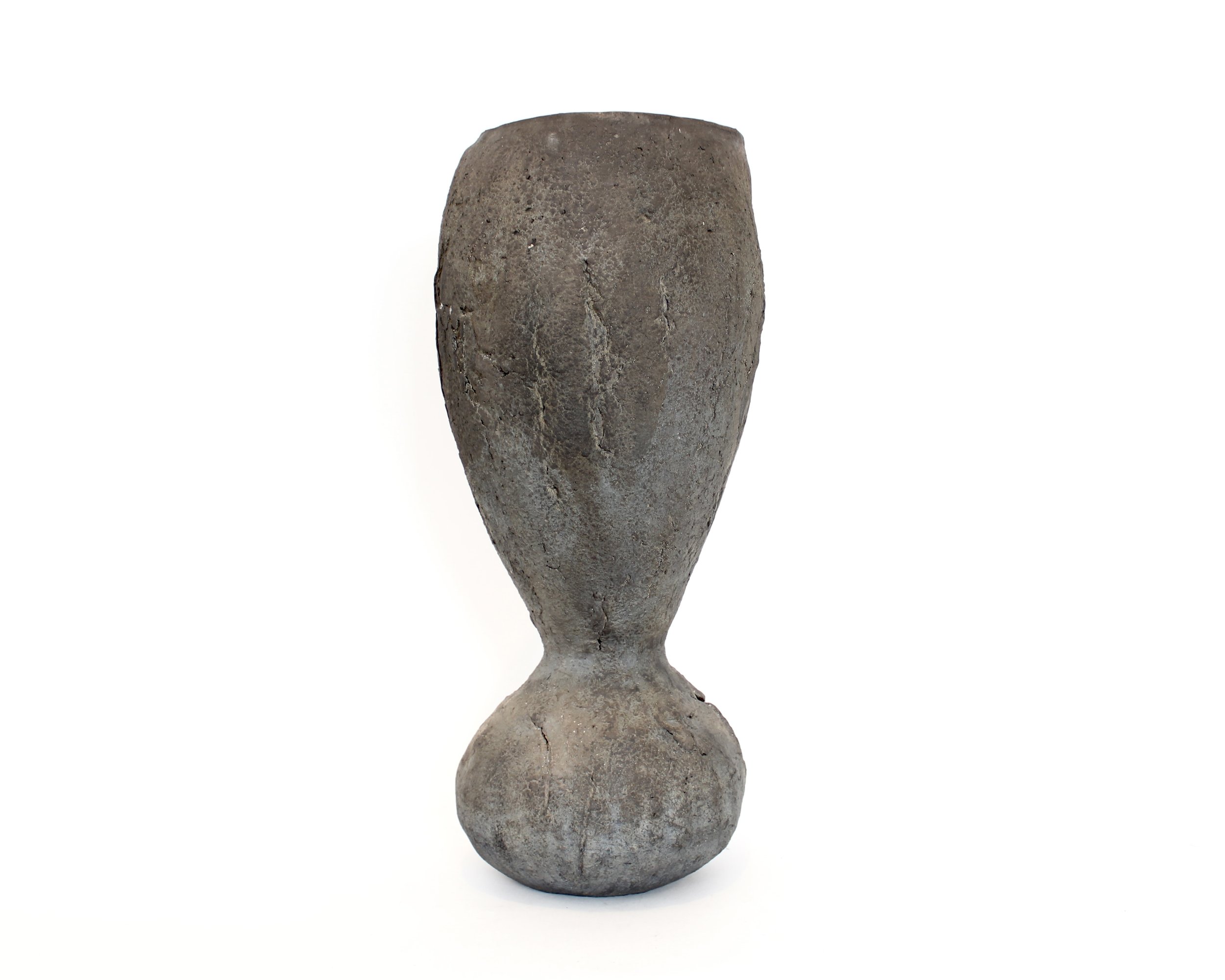
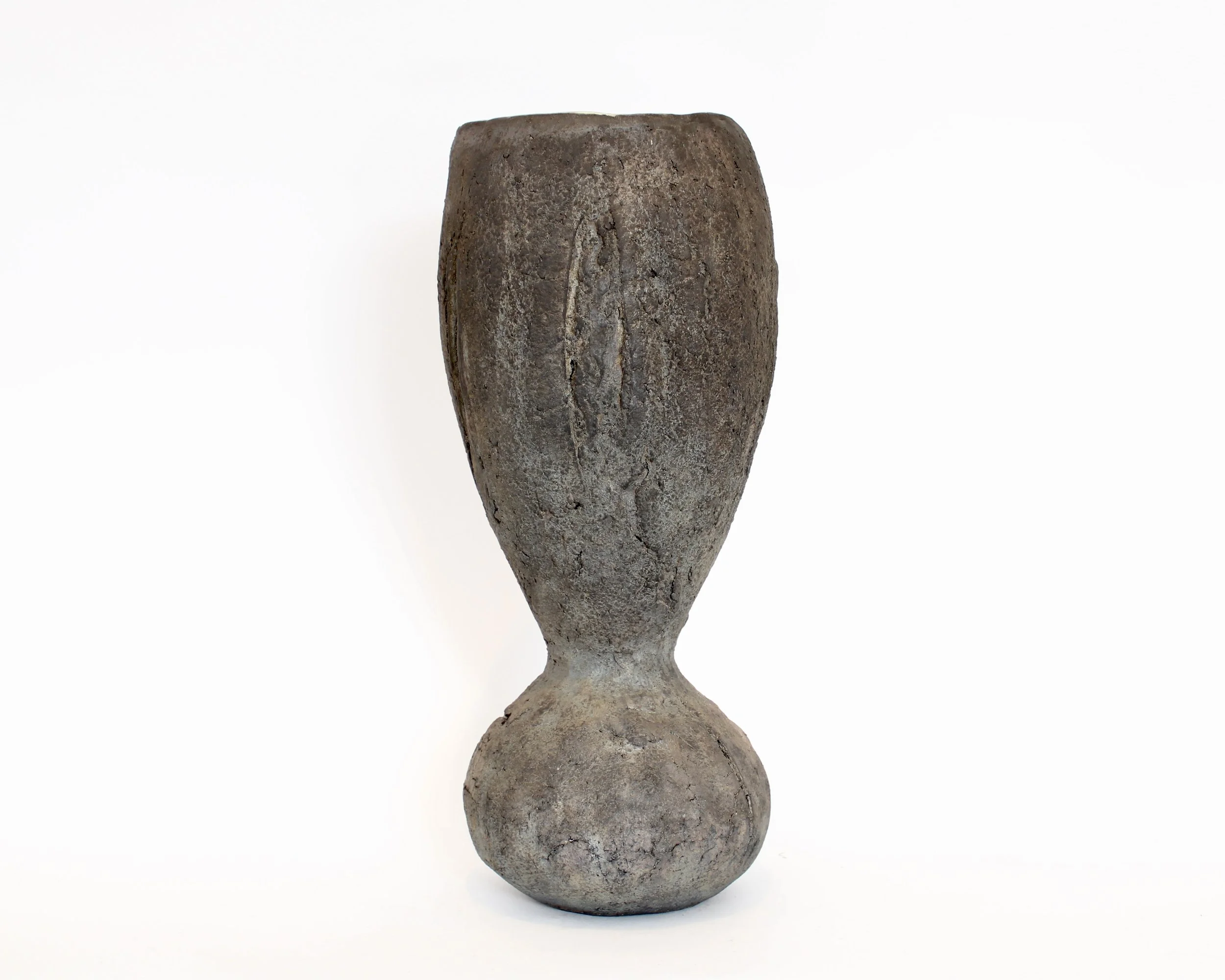
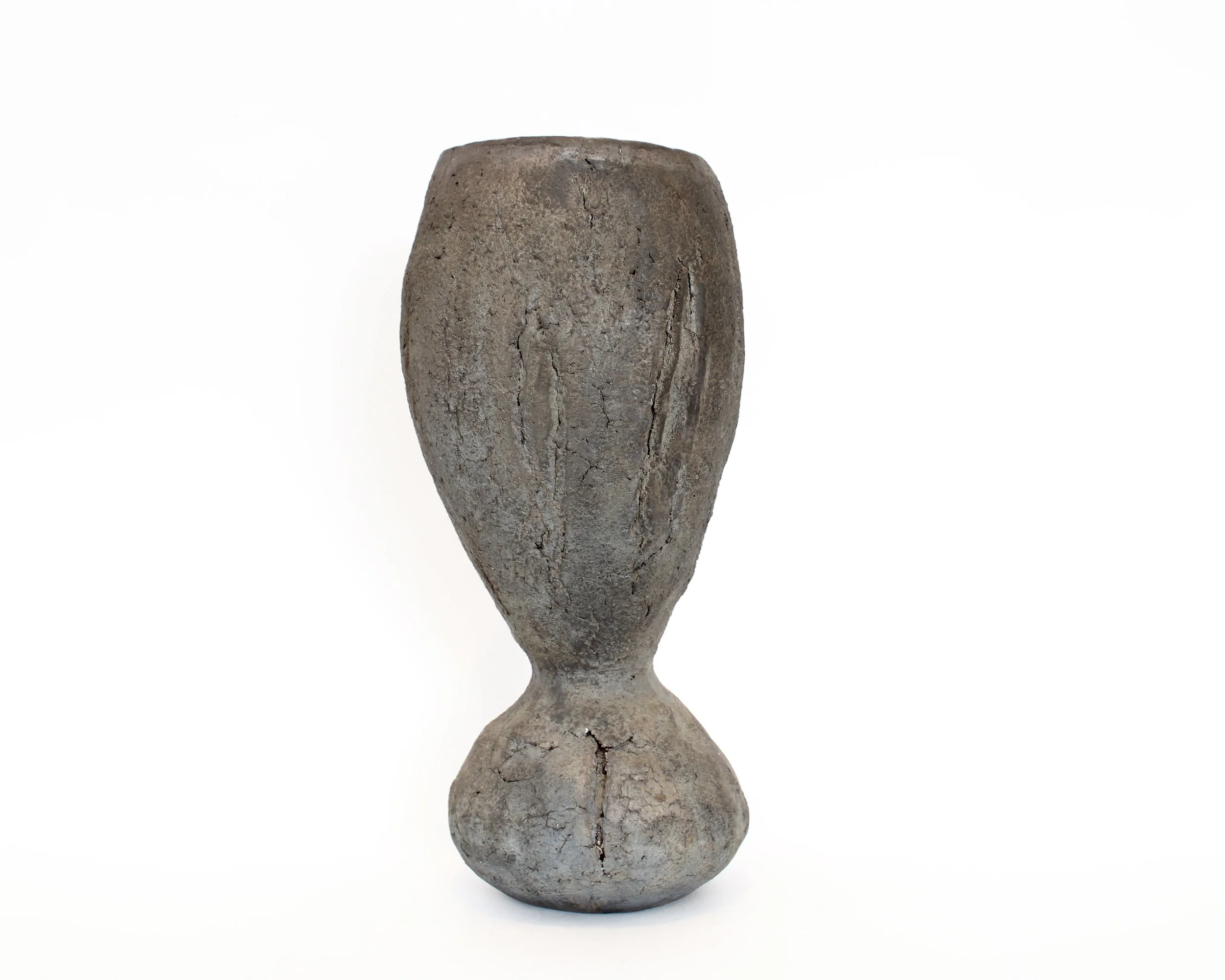
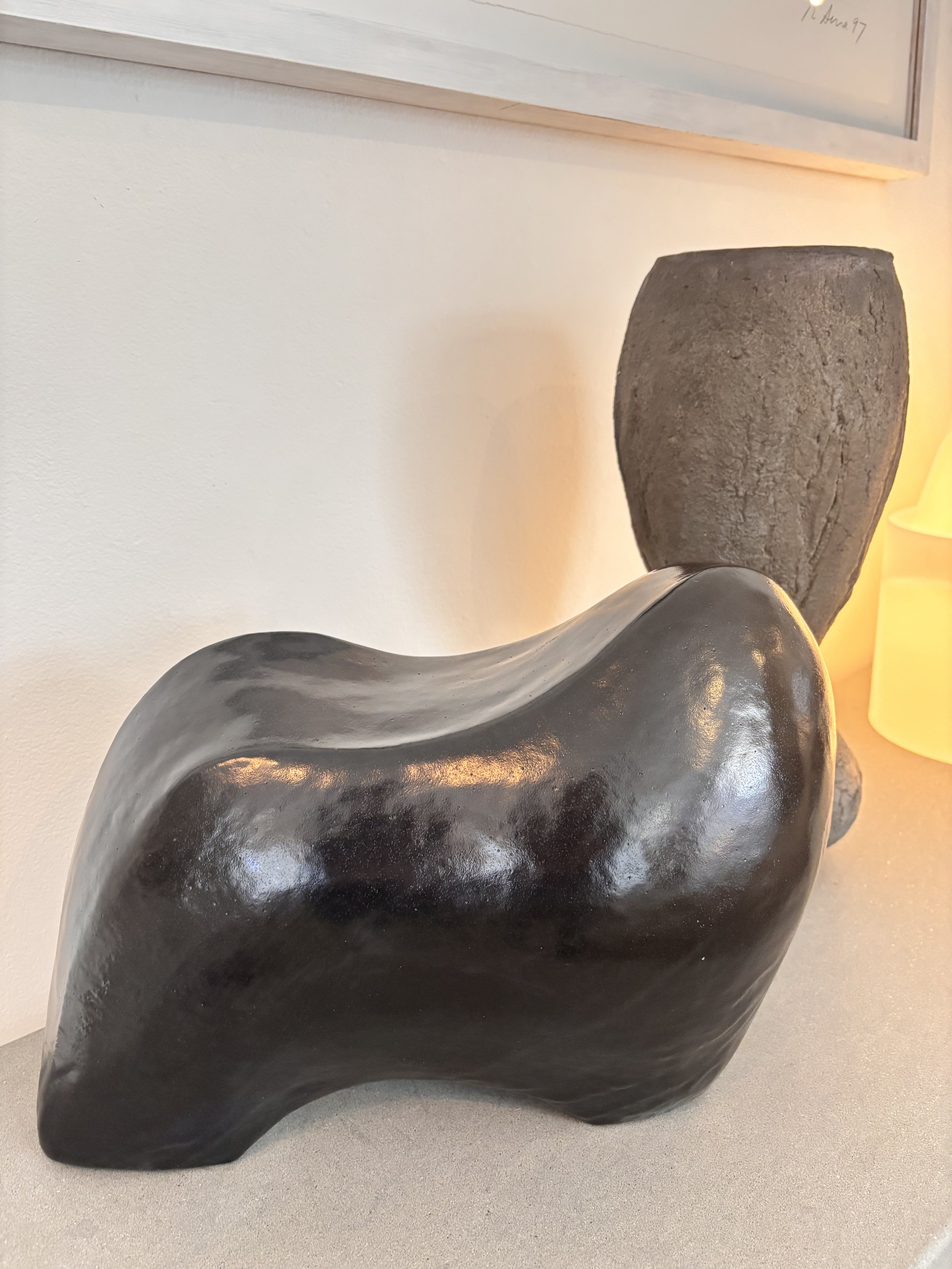
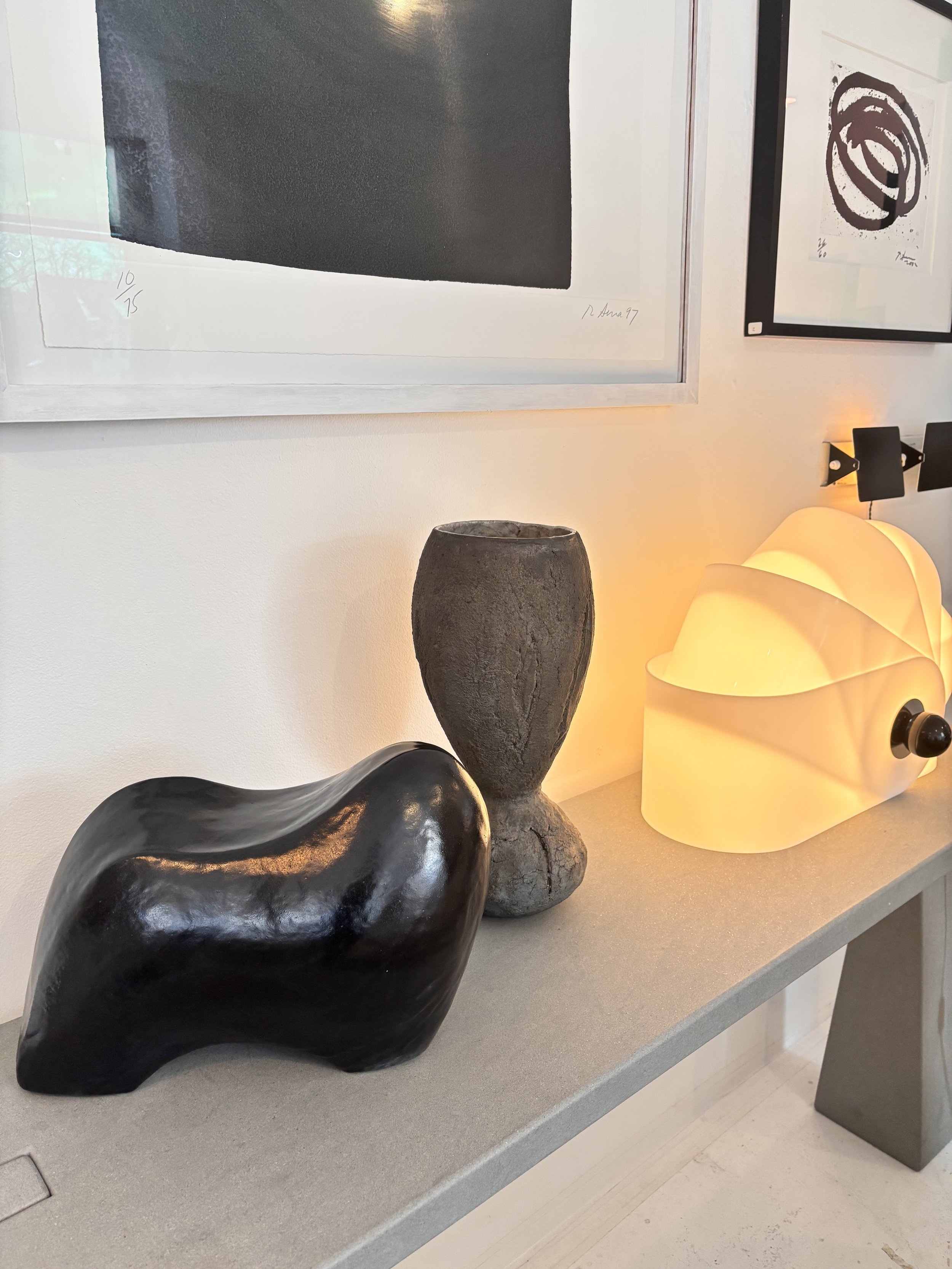
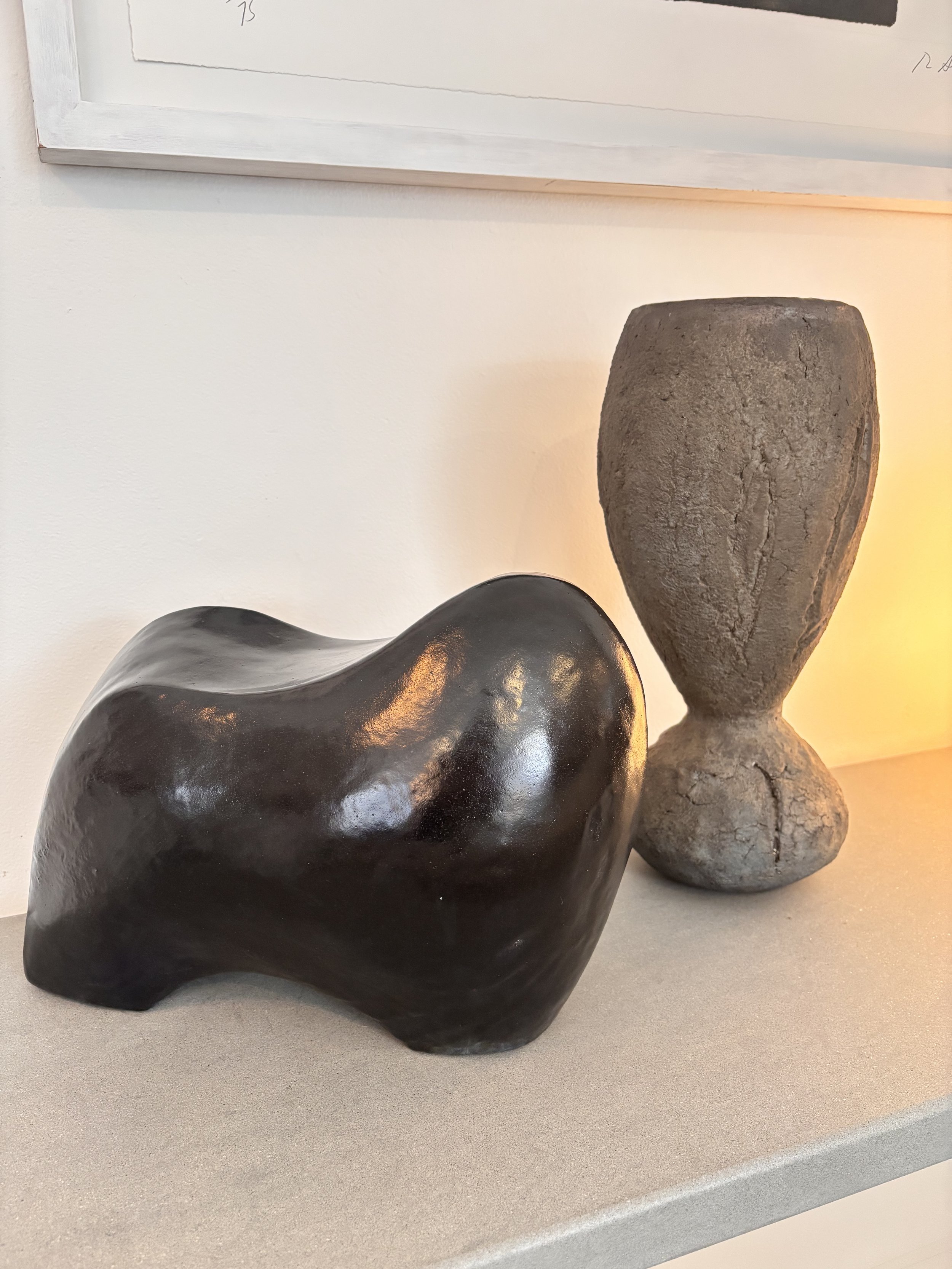
Gisèle Buthod Gracon Raku Vase
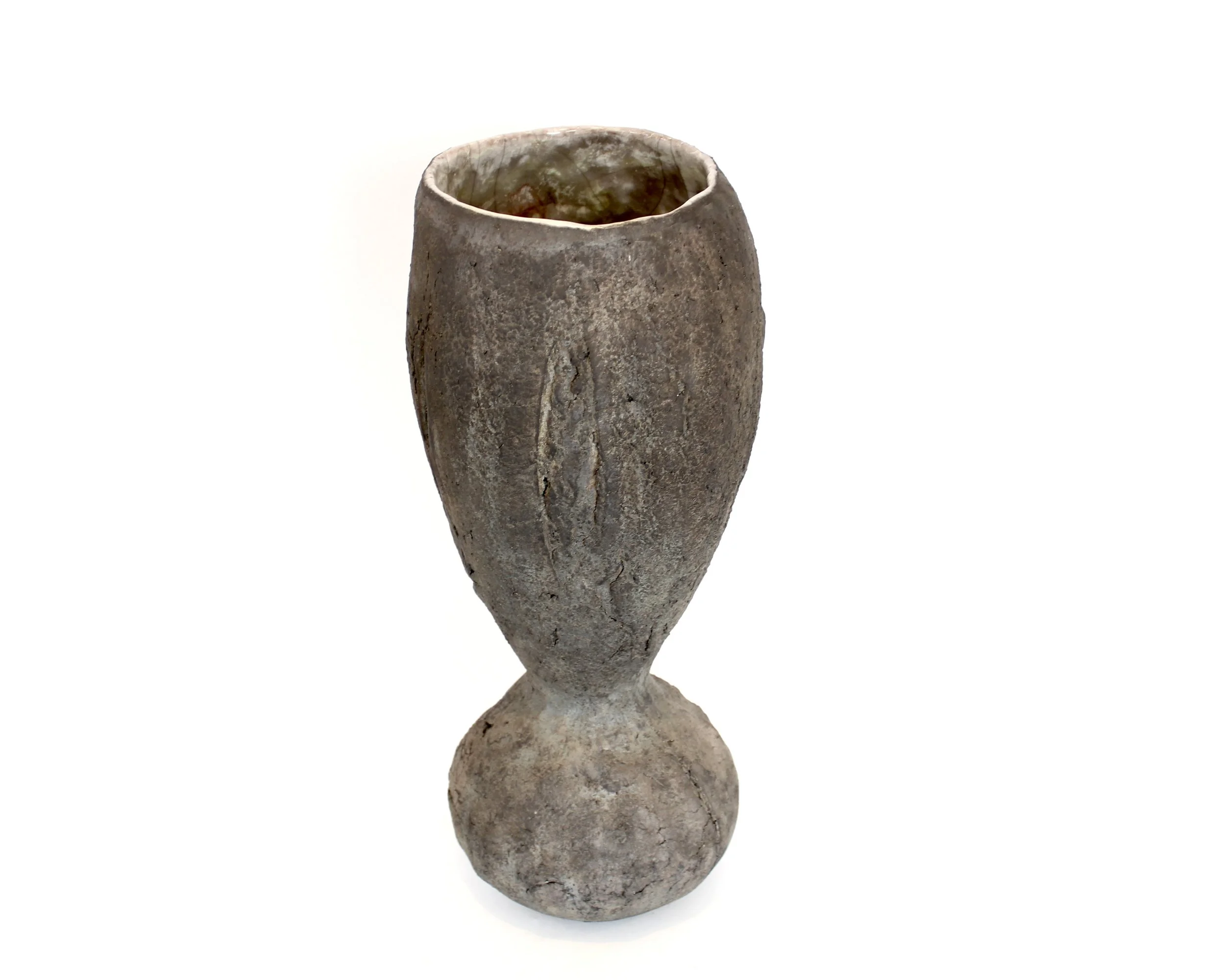
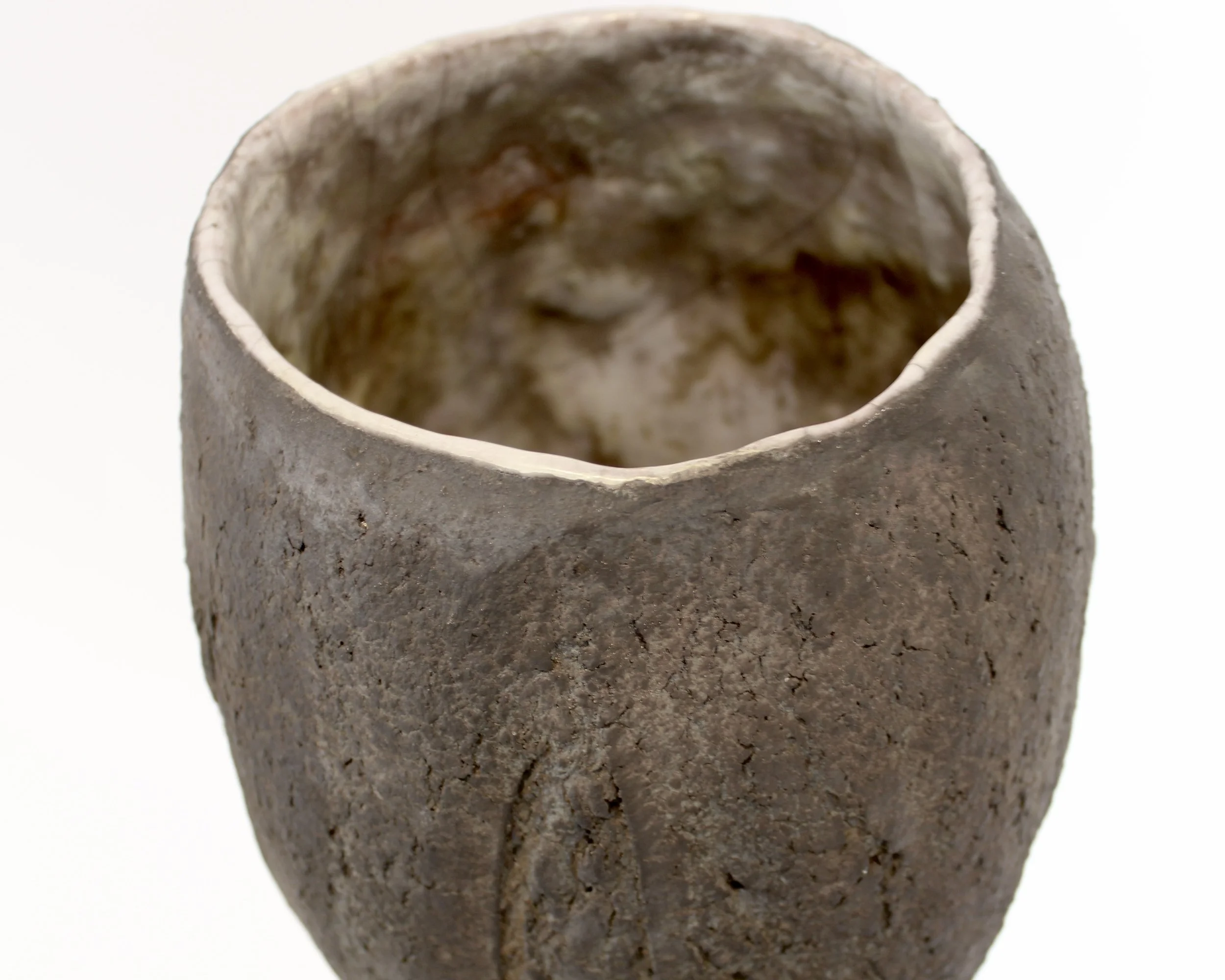
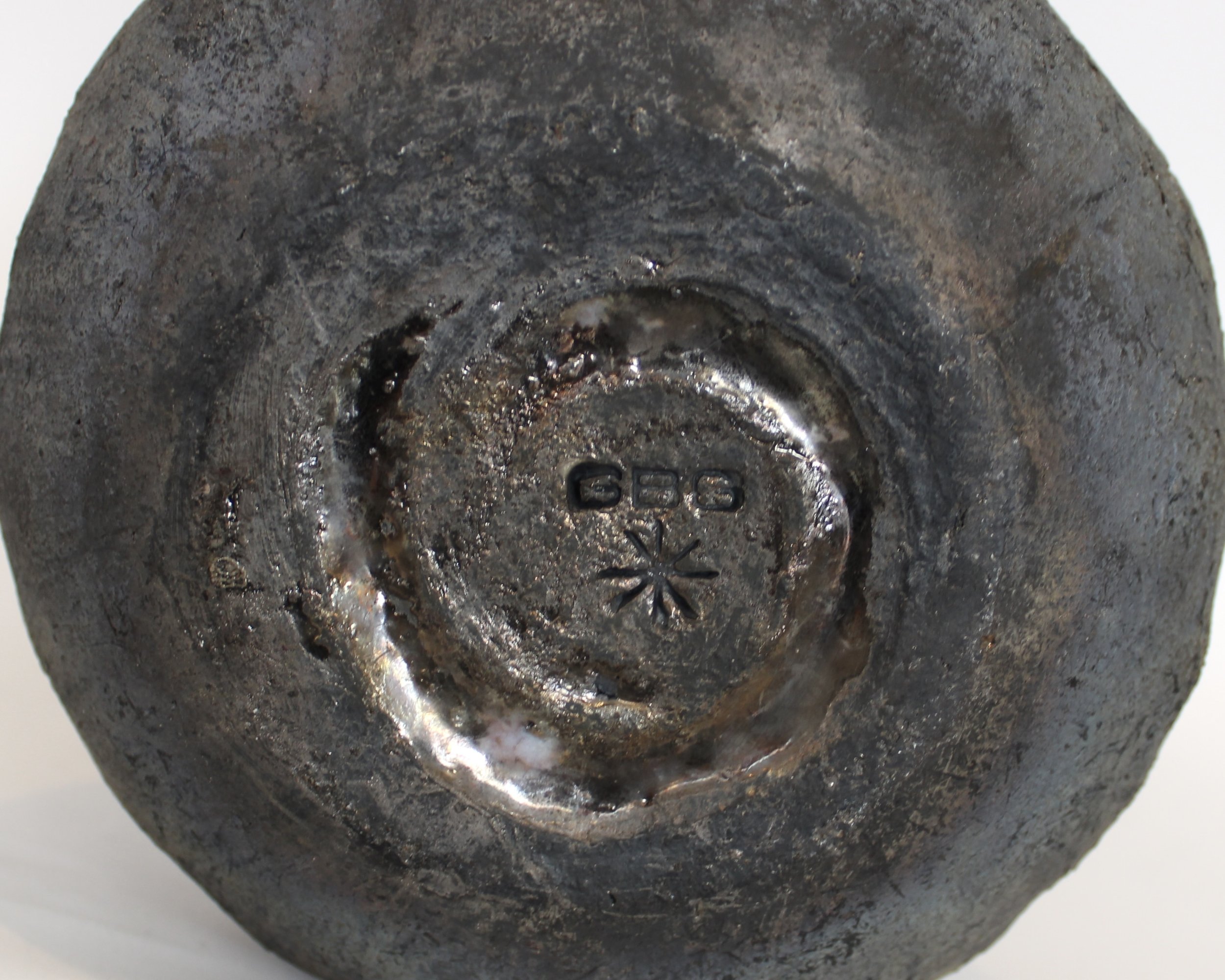
Ceramic Vessel by Gisèle Buthod-Graçon France c 2004. Unglazed exterior with a glazed interior, wood-fired Rakú. Piece unique.
Born, 1954 in Salon de Provence, Buthod-Graçon grew up with nature and the land, which became an underpinning of her work. The major components of her reflection are the volumes in space, and the sculptural dimension of the pieces she creates. Earth, fire, form, enamel (glaze), nature and travel are her sources. Gisèle Buthod-Garçon discovered a passion, the earth, as a material, following a stay in Senegal in 1979 which acted on her as a revealer. Self-taught, she goes from workshop to factory. She completed her training in evening classes at the Ecole des Beaux-Arts in Nîmes between 1980 and 1982. Her artistic ambition asserted itself at the same time as her rejection of her factory experience.
In 1982, she had the opportunity to settle in her own studio. From the beginning, she adopted the technique of American raku which she never left. Born from experiments carried out in the 1950s by Paul Solner, this technique is inspired by that of Japanese Raku, to which we add the stage of smoking. Cooked at low temperature, the pieces are taken out of the oven glowing and placed in a basin filled with hay and horsehair for the final stage of smoking during which the plants imprint the piece or simply color it.
"The raku technique has encouraged expression and freedom for me". Even if the smoking sometimes becomes barely visible, Gisèle Buthod-Garçon stubbornly continues to use it because for her "raku responds to a violent need." The quest for a beautiful quality of enamel is essential for her, c i.e. the materiality, depth, transparency and dynamics of the luminous highlights. This quality is generally obtained at high heat (1,300°C), yet it achieves the feat of obtaining it at low temperature (three successive firings at 950°C, 1030°C and 1050°C). She is now one of the most collected contemporary ceramic artists in France. 7” x 8 x 18” h $2500